
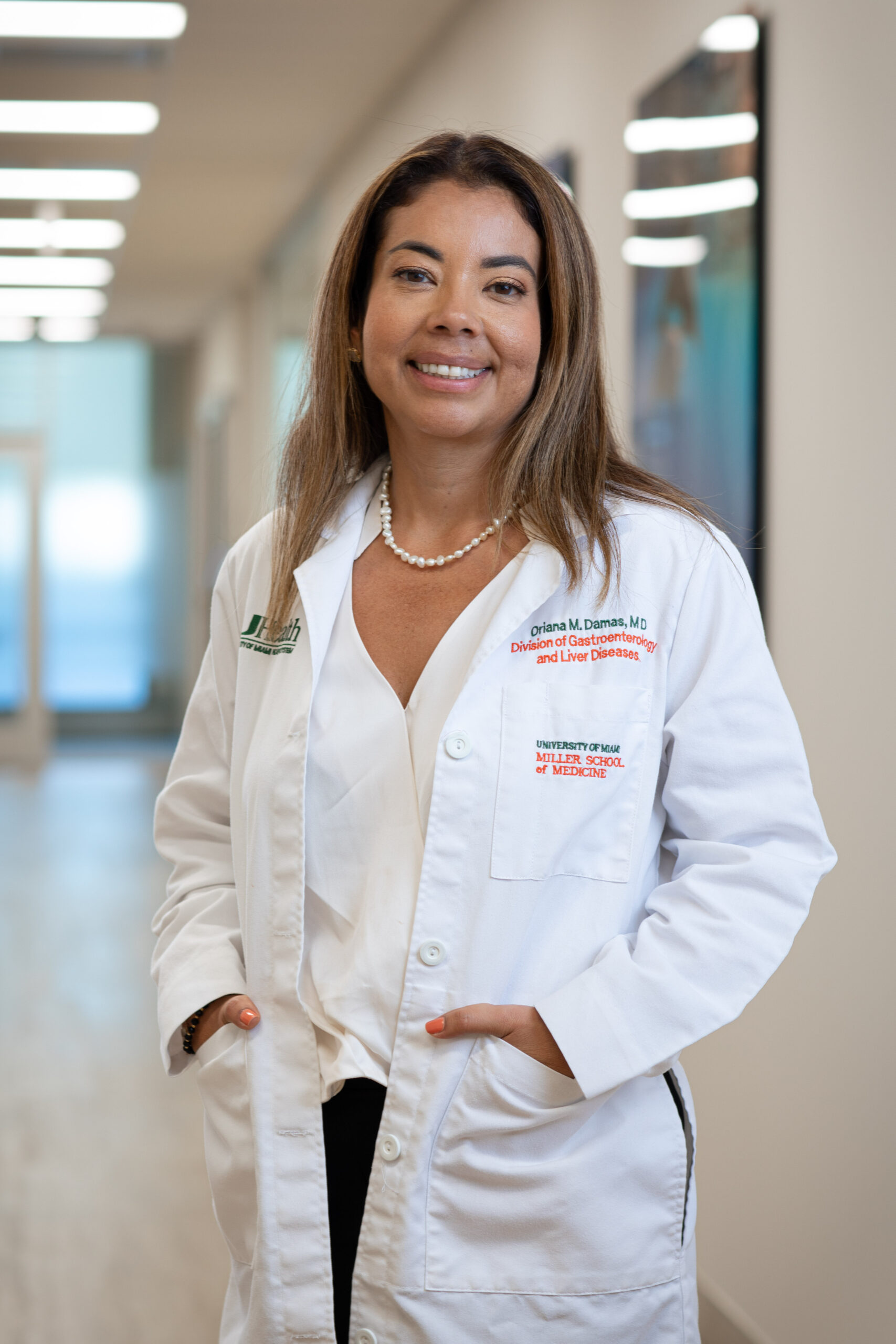
Associate Professor of Medicine, University of Miami Miller School of Medicine; Interim Director for the Crohn’s and Colitis Center, University of Miami Health System, Miami, FL

For clinician-scientist, Dr. Damas, improving care and outcomes for underserved patients with IBD, particularly the Hispanic community, is a mission that is personal.
She moved to the United States from Colombia when she was in middle school, a transition that was challenging for her father, a physician, and her mother, a teacher. She remembers her brother being born at a safety net hospital and having life-saving surgery as a baby, which she believes deepened her empathy for vulnerable patients. This perspective motivates her research to gain deeper insight into IBD in historically overlooked populations and to discover ways to improve their disease management.
Even as early as medical school, Dr. Damas noticed that language barriers were impacting patients’ care. She recognized the need to teach her peers Spanish and introduced medical Spanish classes to enhance communication between students and their patients.
“If a Spanish class could improve the interactions between the students and patients, I was intent on making it happen.”
In 2008, as a medical student, she helped build the University of Miami Health System’s IBD Center Clinical Phenotype Database and Tissue Repository – now with more than 3,000 patients – to better understand South Florida’s diverse IBD patient population. While caring for patients, Dr. Damas observed that Hispanics with no family history of IBD were increasingly developing these diseases.
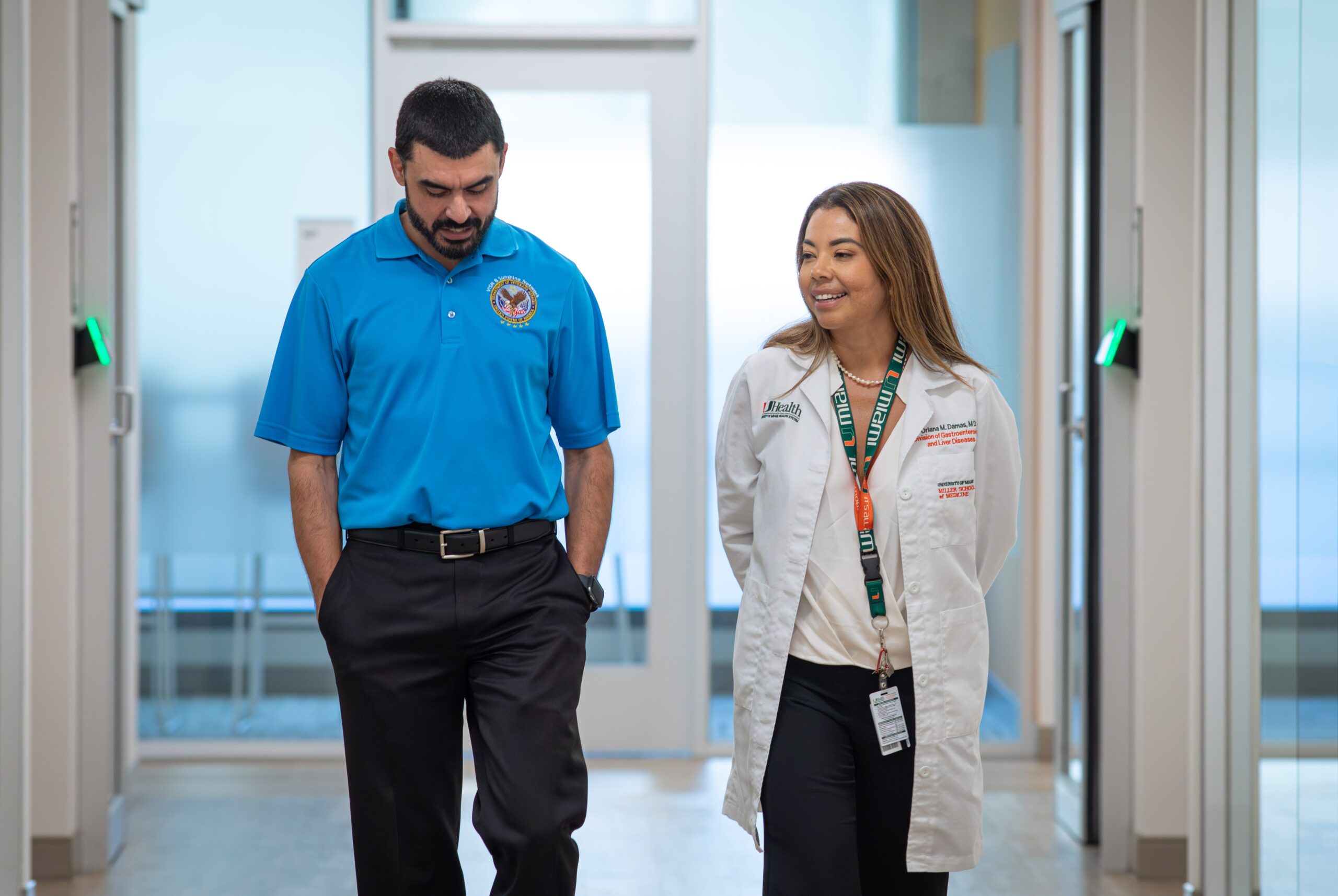
To uncover the causes behind these rising numbers, under the guidance of her mentors, she pursued a research grant to examine the genetics of Hispanic patients with IBD during her gastroenterology fellowship. Only two fellows in the program had pursued a research path within a clinically oriented GI fellowship, and she was one of them. With these funds, Dr. Damas became one of the first scientists to initially describe the phenotype of Hispanic patients, including their genetic risk factors, dysplasia rates, dietary changes, and social determinants of health.
Dr. Damas discovered that Hispanic patients with IBD in the U.S. tend to develop the disease at a younger age if they were born in the U.S. compared to those born in Latin America. This observation led her to examine how genetics and environmental factors contribute to the age of IBD onset. She found that Hispanic and non-Hispanic white patients have a similar genetic risk burden for developing IBD, but environmental influences play a much larger role in determining the age of diagnosis across all groups.
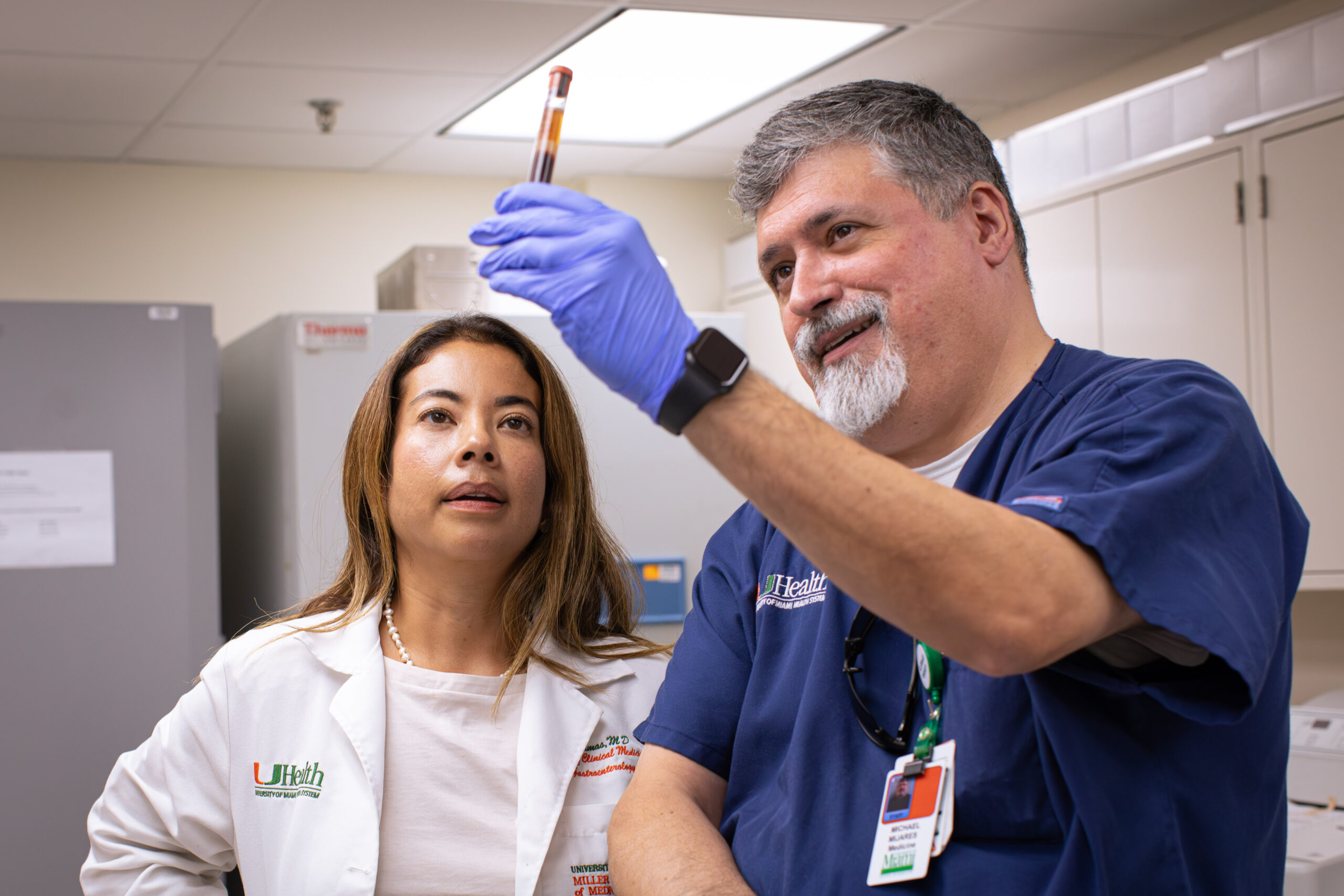
Building on these insights, Dr. Damas explored how genetic variation affects drug response. She directed a study showing that Hispanic patients with IBD carry TPMT genetic variants, which predispose them to leukopenia (low white blood cell count) when treated with thiopurine medications. Her team also discovered that genetic variants along the NUDT15 gene were present in Hispanic patients, particularly in those with greater Indigenous American ancestry, and that these also increase the risk of leukopenia. These discoveries underscore the importance of testing all Hispanic IBD patients for these genetic variants before initiating immunomodulator therapies, as these medicines can lower white blood cell counts. This impactful research earned Dr. Damas the 2022 Disparities Researchers Equalizing Access for Minorities (DREAM) Award, awarded by the University of Kentucky’s Center for Clinical and Translational Science.
This motivated Dr. Damas to pursue a NIH Career Development Award, becoming the first in her GI division to receive this prestigious grant, also known as a K award, during which she also received a Master of Science in Clinical and Translational Investigation (MSCTI). In her K study, she looked at the interaction between genes and diet in Hispanic patients with ulcerative colitis, and learned that those eating traditional foods, such as starchy vegetables and tropical fruits, experienced better outcomes. These findings led her to seek funding from the NIH to initiate a first-of-its-kind culturally tailored diet clinical trial for Hispanic patients with ulcerative colitis, which she has now broadened to include all IBD patients.
“It’s hard to change your diet and even harder to adopt new foods. If we’re recommending a diet, it needs to include familiar foods that people enjoy.”
As part of the study, she plans to examine the intestinal microbiome and genetic variance for fat metabolism to help determine if there are predictive factors for diet response, with the goal of developing personalized anti-inflammatory diets for different IBD patient communities.
Dr. Damas is also conducting a pioneering study examining the impact of weight loss using GLP-1 agonists in people with Crohn’s disease, to determine if weight reduction using these medications can lower inflammation. In another study, she has paired up with a biochemist at the University of Miami to explore if microplastics influence inflammation in IBD – an idea inspired by an earlier observation she made that IBD patients who reported drinking more bottled water had a younger age of disease onset.
“My clinic is my laboratory. My patients inspire my research to improve outcomes – both for underserved and broader IBD populations.”
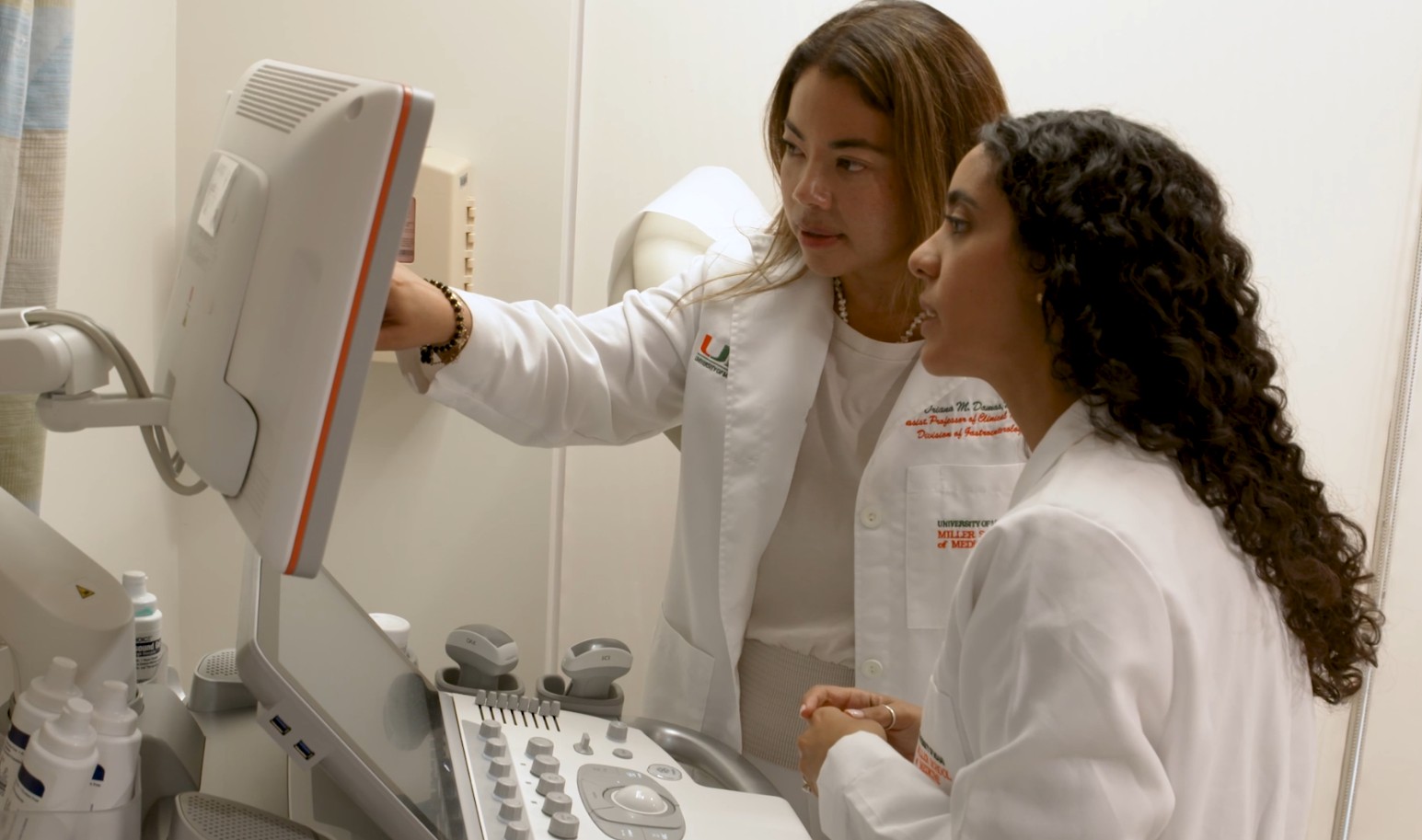
Dr. Damas currently leads the Crohn’s and Colitis Center at the University of Miami Health System, where she is committed to advancing care for patients with IBD. She is one of just two IBD specialists in Miami to offer intestinal ultrasound—a non-invasive method for assessing intestinal inflammation. Unlike colonoscopy, this technique requires no preparation or multiple appointments, eliminating yet another barrier to care for IBD patients.
Her influence extends beyond the local community. Dr. Damas actively collaborates with physicians across Latin America, offering case-based consultations and participating in GI congresses where she frequently highlights the essential role of diet in disease management. These efforts are especially valuable in settings where clinicians may have limited experience managing IBD.
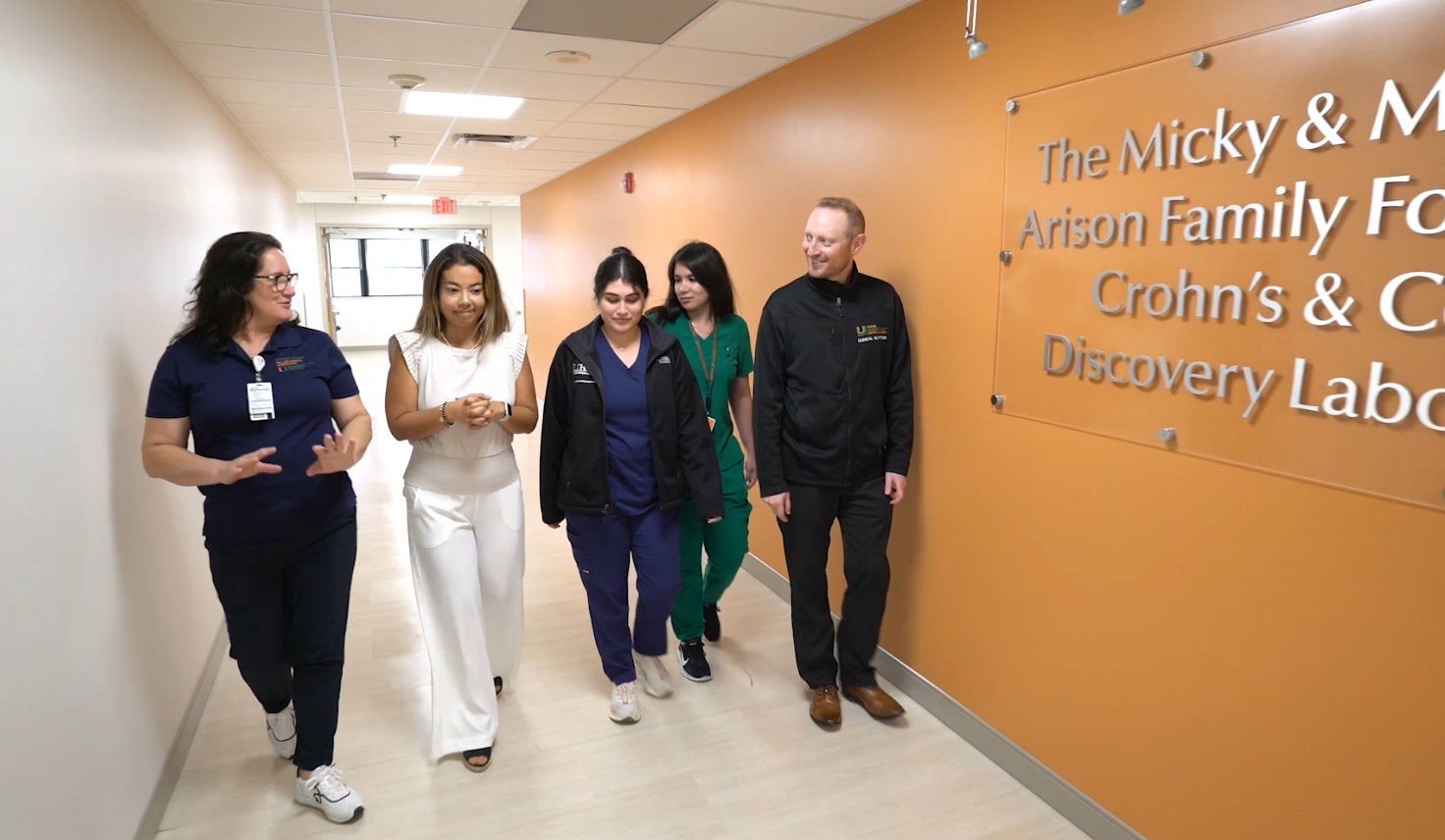
Finally, Dr. Damas is deeply committed to supporting the next generation of physician-scientists, particularly women pursuing careers in gastroenterology. Drawing from her own journey, she mentors trainees through the complexities of the field and recently launched a Women in GI group in South Florida to foster community and mentorship.
“What fuels me is seeing a patient who’s doing incredibly well, answering a research question, and helping someone along in their career. Making these differences is what it’s all about.”

More about Dr. Damas