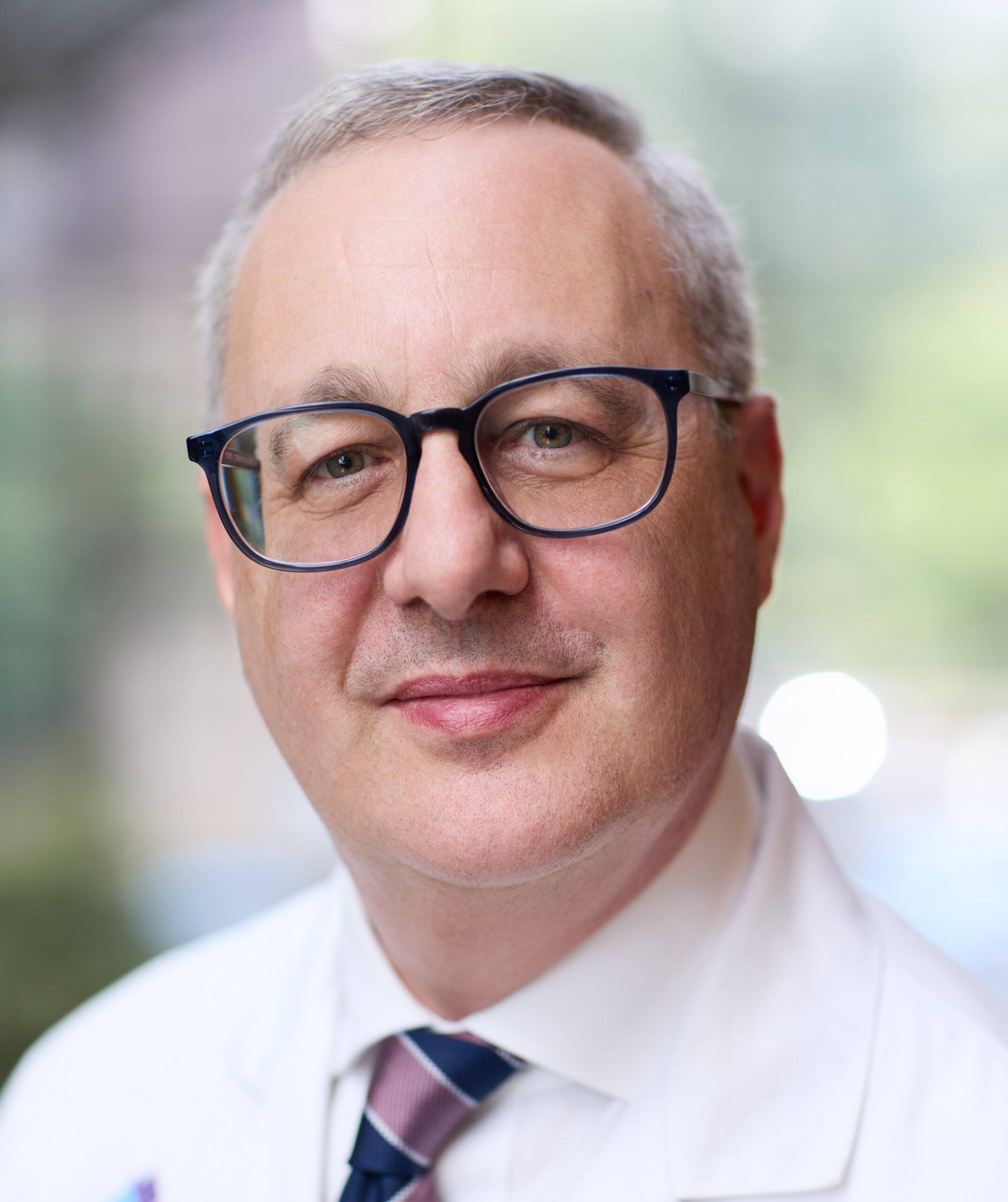
Assistant Professor of Medicine, Director of Digital Health and Innovation, Director of Digestive Disease Biobank for Precision Medicine, Division of Gastroenterology and Hepatology; Stanford University School of Medicine; Stanford, CA

Growing up in Duncan, Oklahoma, a small town near the Texas border, Dr. Sinha developed an early curiosity about the world beyond what was immediately in front of him. Exploring the creek near his home, he discovered unexpected wonders and came to believe that if you looked carefully enough and in the right places, you could find something extraordinary. That instinct—to look more closely and pursue what others may overlook—has remained a defining part of his work.
Today, Dr. Sinha brings that same curiosity to some of the most difficult problems in IBD. Guided by mentors and shaped by training in Stanford Biodesign and translational immunology, he has built his career around patients’ unmet needs, looking beyond conventional approaches to find better answers.
“The treasures have turned out to be something quite different than what I encountered as a child, but the joys of discovery have remained.”
One of his earliest examples of this needs-focused approach was as a first-year GI fellow meeting a patient in his 90s with ulcerative colitis (UC) whose disease was confined to the final portion of his colon. The elderly man had taken oral steroids for decades and was living with severe bone loss and many other side effects. Topical treatments that could have worked were all tried but were too difficult for him to administer and tolerate.
For many physicians, this might have been an unfortunate limitation of the available treatments. For Dr. Sinha, it was a problem worth solving.
The idea for a solution was inspired by an unlikely childhood memory: the chocolate syrup that, when poured over ice cream, hardens on contact. Dr. Sinha envisioned a treatment that could be administered as a liquid, travel proximally to the affected tissue, and then thicken and adhere to where it was needed to deliver medication to the diseased areas.
Turning the concept into a viable treatment required expertise outside medicine and Dr. Sinha’s skill set. Dr. Sinha worked together with material science and drug formulation experts at Stanford to develop a thermosensitive delivery system for topical IBD therapies. The resulting technology was published in Gastroenterology, licensed by Stanford to a company Dr. Sinha co-founded, and has progressed to human trials.
It is this rare ability to envision what does not yet exist, find a way to build it and bring together the expertise to make it possible that sets Dr. Sinha apart.
“I’m interested in tackling the problems most affecting my patients, whether I have the expertise or not. We can create the right teams with the right expertise”
The willingness to challenge conventional thinking has also shaped his work in nutrition, where he took on one of the most common questions in IBD: What should I eat?
For years, patients with Crohn’s disease and UC had few evidence-based answers. Dr. Sinha looked outside IBD research and revisited findings from a study in Science Translational Medicine that had tested a fasting-mimicking diet in healthy volunteers.
The study had not demonstrated a significant reduction in systemic inflammation overall. But Dr. Sinha examined the data more closely and noticed that participants who entered the study with elevated inflammatory markers appeared to benefit from the diet.
The finding raised an important question: could the same diet have a meaningful effect on patients with IBD? Dr. Sinha set out to answer it in a randomized controlled trial.
Published in Nature Medicine in 2026, the study demonstrated that a five-day-per-month fasting mimicking diet taken for three consecutive months produced a clinical response in 69 percent of adults with mild-to-moderate Crohn’s disease and remission in nearly two-thirds, both significantly higher than in the control group. This study was the largest randomized controlled trial of a non-exclusionary dietary treatment in adults with Crohn’s disease and addressed a major gap in evidence around nutrition and disease management.
But for Dr. Sinha, the goal is not to necessarily identify a single diet that works for everyone with IBD.
He sees nutrition as another area where IBD needs a precision framework: moving from general dietary recommendations toward an understanding of why a particular dietary treatment is effective for some patients and not others. His current research investigates how changes in the specific microbiome and metabolite profiles in patients may predict response to dietary interventions.
This combination of clinical observation, scientific rigor and creativity has led Dr. Sinha to rethink how IBD is studied.
Much of what is known about the intestinal microbiome in IBD comes from stool samples. But stool represents material from throughout the gastrointestinal tract, making it difficult to determine where individual biological signals originate. Dr. Sinha recognized that answering the question required something that did not yet exist for clinical research.
He built a collaboration with the developers of CapScan®, a swallowable capsule designed to sample the small intestine as it travels through the gastrointestinal tract, allowing researchers to identify where in the intestine certain microbial signatures are from. Currently, his team is the only one in the world using the technology to study patients with IBD. The work was recognized with a 2024 Rainin Foundation Innovator Award.
Again, the technology is only part of the story. What is remarkable is Dr. Sinha’s instinct to recognize its potential for IBD and pursue a question that conventional approaches could not adequately answer.
“There are certainly times where I’ve been known to not ‘stay in my lane.’ You can’t find solutions to tough problems by remaining where you’re comfortable.”
His talent for seeing possibilities where others may not has also drawn him to some of the field’s most intractable problems—areas where patients have few, if any, effective treatment options.
Up to half of patients with Crohn’s disease will develop fibrostenotic complications, yet no antifibrotic therapy exists. Primary sclerosing cholangitis (PSC), another serious condition associated with IBD, can lead to liver failure and early death. Despite decades of clinical trials, no therapy has been approved or has reliably shown to modify the disease.
Dr. Sinha began asking whether a familiar class of medications might offer a new possibility.
Statins are widely used to lower cholesterol, but they also have anti-inflammatory and antifibrotic properties. Dr. Sinha and his colleagues investigated whether those properties might benefit patients with stricturing Crohn’s and PSC. Using national databases, they identified associations between statin use and improved outcomes in large patient cohorts. These findings provided the rationale to launch two prospective investigator-initiated trials, one in each condition, both now actively enrolling.
Rather than stop at an observational finding, Dr. Sinha designed the studies to determine not only whether statins can prevent or modify disease progression, but which patients are most likely to respond.
The capacity to see beyond the obvious has led him to rethink another fundamental challenge in IBD: how disease can be monitored more simply and less invasively.
For patients, determining whether disease is active can mean repeated blood tests, stool collection and invasive procedures. Dr. Sinha has explored whether information contained in exhaled breath could provide a less burdensome alternative.
Rather than focusing on volatile gases in breath, his group examined the moisture carried in exhaled air known as exhaled breath condensate (EBC). EBC carries a rich collection of biological molecules that cannot be captured through conventional breath-gas analysis. His team has demonstrated that these EBC markers can distinguish active from inactive UC, with results that have outperformed commonly used biomarkers in discovery and independent validation cohorts. The next step is to determine whether changes in EBC profiles can follow disease activity and biological response over time, potentially creating a less invasive way to monitor patients’ response to therapy.
His influence extends beyond the research itself. Dr. Sinha has mentored more than 20 trainees, from high school students to postdoctoral scholars, encouraging them to identify work that is meaningful to them rather than directing them toward a predetermined path.
“The greatest privilege is helping the next generation find their own path and make their own mark”
As a longstanding executive committee member and course director for the AGA Center for GI Innovation and Technology, he continues to expand its innovation curriculum and is developing parallel mentorship programs for trainees within the Stanford GI Division.
He was fortunate, he says, to have mentors who invested deeply in his development and modeled generosity with their time and opportunities. He now feels both the joy and the responsibility of doing the same for those who come after him.
For Dr. Sinha, clinical care remains at the heart of his research. The problems he encounters in his patients have inspired his work in nutrition, drug development, disease monitoring and therapeutic innovation. The spirit of discovery that began in childhood continues to shape the way he pursues those answers, applying inventive, out-of-the-box thinking and fresh perspectives to find solutions. He is focused on translating research into meaningful advances in patient care, guided by one enduring question: What do our patients need most?

More about Dr. Sinha